Valorant aim that stays calm in 2026 comes down to four settings and one Phoenix habit
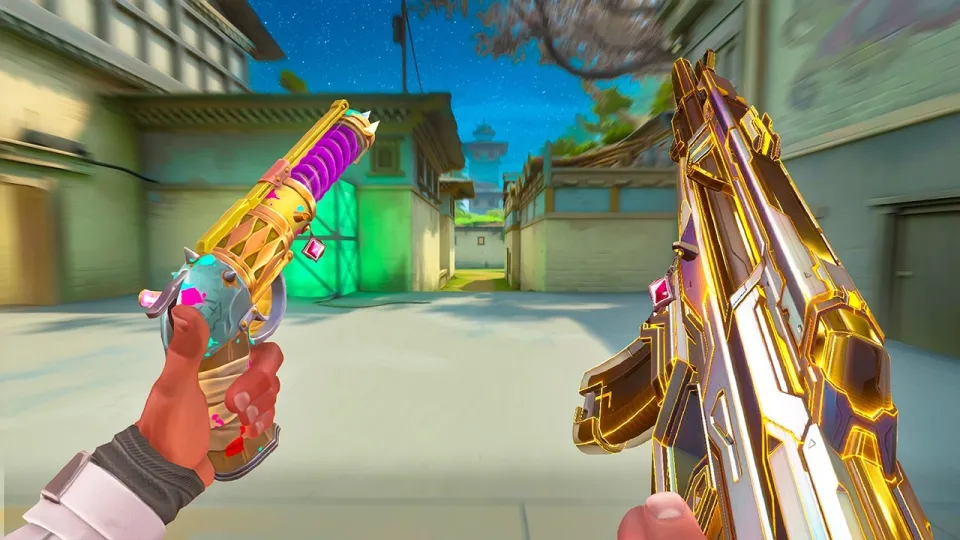
Video: low cortisol aim..
You can order the same kind of articles for your own video to boost it on YouTube and Google. Just message the Telegram bot @sat_sit_bot. It writes articles around your video, embeds the video and publishes them on popular niche websites (no ads). Your first 50 articles are free.
· based on the channel Rawzu
Key takeaways
- Rawzu runs 400 DPI with 0.625 in-game sensitivity, roughly 250 eDPI, on a 1440x1080 stretched resolution.
- Crosshair code style is 1-6-2-2, paired with a Logitech G PRO X Superlight 2 and an Artisan Zero Soft pad.
- Display is a Zowie XL2566K at 360Hz, the hardware side of a low-latency, low-friction aim setup.
- The agent in the footage is Phoenix, chosen for flashes, a vision-blocking wall and a self-revive ultimate.
- Rawzu's channel also links a PC optimization service at hone.gg and original music on Spotify.
Valorant aim that reads as calm is mostly a settings decision plus a decision-making habit, and Rawzu's "low cortisol aim.." footage shows both sides of it. The setup behind the clip is 400 DPI at 0.625 in-game sensitivity, a 1440x1080 resolution, crosshair values 1-6-2-2, a Logitech G PRO X Superlight 2 on an Artisan Zero Soft, and a Zowie XL2566K running at 360Hz. If you want the same starting point on your own machine, optimize your PC for Valorant first, because frame stability matters more than any single sensitivity number.
What "low cortisol aim" actually means in Valorant
Low cortisol aim is a style, not a setting: it describes crosshair placement and micro-adjustments done without panic flicks, so the shot is already lined up before the enemy appears. In practice that means holding angles at head height, clearing corners with small strafes, and letting the enemy walk into the crosshair instead of chasing them. Rawzu's clips lean on this idea because the visible result looks slow and boring while the inputs are actually tight and repetitive.
The phrase also points at a physiological side. High heart rate, tense grip and shallow breathing all add overshoot to your mouse movement, and the fix is mechanical before it is mental: a lighter grip, a mousepad with consistent glide, and a sensitivity low enough that a full swipe does not spin you around.
The exact Valorant settings behind the clip
Rawzu's published peripherals and sensitivity are the concrete part of the video, and they are worth copying as a baseline rather than as gospel.
- Sensitivity: 400 DPI multiplied by 0.625 in-game, which works out to 250 eDPI. That is on the low side of average for Valorant duelists and it favors arm aiming over wrist flicks.
- Resolution: 1440x1080, a stretched 4:3-style aspect that widens player models on screen and makes heads slightly easier to track.
- Crosshair: 1-6-2-2, a thin, compact reticle that does not cover the target at long range.
- Mouse: Logitech G PRO X Superlight 2, a lightweight wireless shape that keeps the hand relaxed during long sessions.
- Mousepad: Artisan Zero Soft, a control-leaning cloth pad that trades a little raw speed for stopping power.
- Monitor: Zowie XL2566K at 360Hz, which reduces the delay between an enemy peeking and that information reaching your eyes.
Nothing in that list is exotic, and that is the point. A calm aim style survives hardware changes, but it collapses if your frame rate swings or your mousepad is worn smooth in the middle.
Why Phoenix fits a calm aim playstyle
Phoenix is an offensive duelist who hunts enemies while crippling their ability to shoot back, and his kit rewards players who pre-aim rather than react. Curveball blinds enemies even when they are tucked behind corners, which lets you swing a held angle with the advantage already in your pocket. Blaze creates a wall that blocks vision and deals damage, so you can cross open ground without exposing your body to three angles at once.
Hot Hands adds a damaging zone that doubles as self-healing, and Run it Back gives Phoenix a second life if a trade goes wrong. The combination is forgiving: you can take a duel, miss, and still reset the round. For a low-sensitivity player, that forgiveness is what makes aggressive entries viable, because your first shot is accurate but your turn speed is limited.
The movement habits that make the aim look effortless
Movement is the part viewers notice first, and it is also the part that is hardest to copy from a highlight reel. The rule is simple: never shoot while moving, and never stop moving without a reason.
- Counter-strafe before every shot. Tap the opposite key for a fraction of a second so your character is fully stopped when the bullet leaves the gun.
- Pre-aim the corner before you peek it, not after. Your crosshair should already be at head height on the wall edge.
- Use short strafes to clear angles instead of wide swings, so your mouse only has to travel a few pixels.
- Keep your wrist neutral and your grip loose; a death grip on a Superlight 2 turns small corrections into overcorrections.
- Reset your crosshair to the next likely angle during every reload and every ability cast.
Common viewer questions about this kind of aim
Viewers routinely ask whether a setup like this transfers to their own rank, and the honest answer is that sensitivity is personal while resolution and crosshair are cheap experiments. Copy the 250 eDPI range, play ten deathmatches, and adjust by 0.025 until tracking feels stable at mid range.
A second recurring question is why the gameplay looks so different from typical flashy montages. The answer is that the clips favor holds, trades and utility usage over 180-degree flicks, which is exactly what wins rounds in ranked play. A third theme is hardware anxiety: a 360Hz monitor helps, but a stable 240 frames per second on a 144Hz panel will beat an unstable 360Hz setup every time. Finally, players ask about the music and editing style, which is a Rawzu signature rather than a Valorant mechanic, and it does not change how the aim works.
How to build your own low-stress aim routine
A repeatable routine beats a lucky highlight, so structure your practice around the same inputs the clip relies on.
- Five minutes of static taps at head height in the range, no flicking, just placement.
- Five minutes of strafe-and-stop shooting against bots to lock in counter-strafing.
- Ten minutes of deathmatch with one rule: only take fights you pre-aimed.
- One ranked game where you review every death and ask whether your crosshair was already on the angle.
Track one number only, such as headshot percentage over a week, and change one variable at a time. If you swap sensitivity, resolution and crosshair on the same day, you will learn nothing about which change helped.
Useful links
- Optimize your PC for Valorant — the service Rawzu promotes for frame stability and lower input latency.
- Rawzu's original music on Spotify — the tracks used across the channel's edits.
- Rawzu's Discord — community server for settings talk and clip discussion.
- Second channel: https://www.youtube.com/@rawzuV2
Final takeaway
Calm Valorant aim is a compound of a low, stable sensitivity, a control mousepad, a crosshair that does not obscure the head, and a habit of pre-aiming every angle before you swing it. Rawzu's 400 DPI at 0.625, 1440x1080 resolution and 1-6-2-2 crosshair are a sensible baseline to test, and Phoenix is a forgiving agent for players who want to entry without relying on raw flick speed. The channel Rawzu built this footage around a simple idea: reduce the noise in your setup and your decisions, and the aim looks slow because nothing is wasted. Start with the PC optimization link Rawzu recommends, then change one setting per session until the crosshair feels like it is already where it needs to be.
Questions & answers
Is 400 DPI at 0.625 sensitivity too low for Valorant?
It works out to 250 eDPI, which is low but well inside the range many Valorant players use. It favors arm aiming and precise micro-corrections, so it suits players who pre-aim angles rather than flick. If you struggle to clear close corners, raise it in small steps of 0.025 until tracking feels comfortable.
Does a 1440x1080 stretched resolution actually improve aim?
Stretched resolutions widen player models horizontally, which some players find easier to track and to hit at range. The trade-off is a distorted field of view and slightly different movement feel. It is a preference, not a requirement, and it costs nothing to test for a few deathmatches.
Why does the gameplay look so calm compared to other Valorant clips?
The clips focus on holds, pre-aimed duels and utility usage instead of fast 180-degree flicks. That style produces fewer dramatic moments but more consistent rounds, because the crosshair is already on the angle before the enemy appears. It is a decision-making habit more than a hardware trick.
Do I need a 360Hz monitor and a Superlight 2 to aim like this?
No. A high refresh monitor reduces latency, but stable frame rates matter more than the panel's maximum refresh rate. A lightweight mouse and a control pad help consistency, yet the bigger gains come from counter-strafing, crosshair placement and a sensitivity you can repeat under pressure.
Source: low cortisol aim.. · Markdown version